

Most people think of cemeteries as a place you visit to bury a loved one, and maybe visit their grave occasionally. Historians, on the other hand, see history and not just any history but local history. When others are avoiding them, we are searching for them. The stories that are often just waiting to be told from the past are often connected to old cemeteries. For example, the photo above is Mt. Olivet Cemetery in Frederick, Maryland. Now, I am not from the area, but I was there to explore some Civil War history when I discovered that this particular place has some neat history tied into it by the graves within. I discovered that Francis Scott Key, his wife and his parents are buried here. Along the back road, there are also unknown graves of Civil War soldiers. But these are not the only people buried there, everyday common people who lived through unique times have their own unique stories to tell.
Cemeteries have more than stories of those buried there to tell us. By walking old cemeteries we can learn about architecture and design by studying the monuments and how they changed through the ages.

Take a look at this 19th century monument. Notice how intricate the details are in the lilies. Can you imagine the hours it took the artist to carve the lilies out of stone? It does not necessarily mean that because this monument is so ornate that the individual was loved more than say the photo below. It does however, mean that the style and era had changed
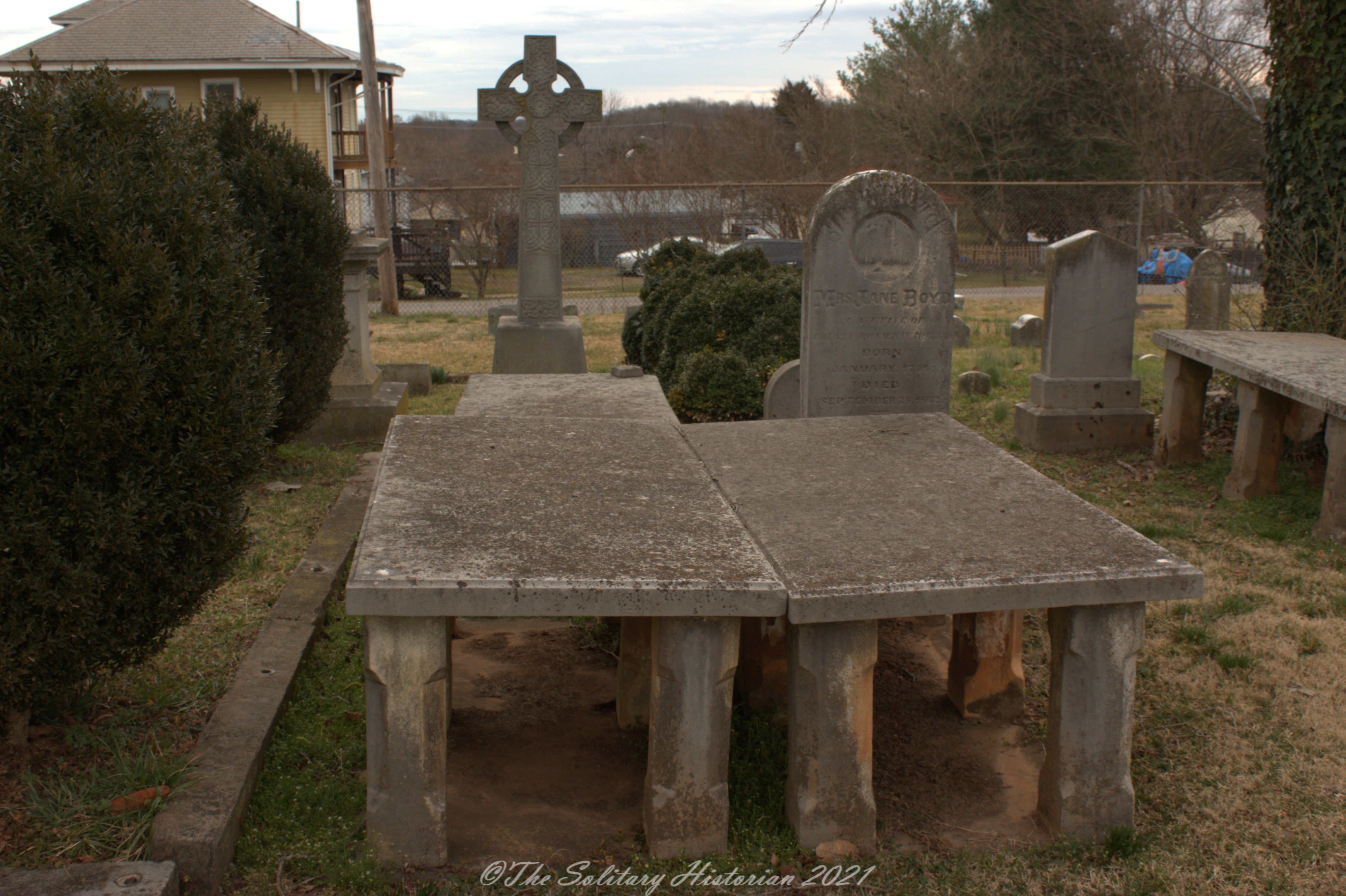
In stark contrast to this beautiful memorial, stands the 18th century style known as tables. These were more prominent in England but carried over into the Southeast section of the country. They are however, not as prominent as one might think in that they are rarely found. If they are, they are typically collapsed.

Today, monuments or grave markers can be beautiful without the overly intricate designs. Note that while they are not always so intricate as in the past, they are still capable of expressing the love of a dearly departed.

Did you know you could learn a lot about a town’s local history simply by walking and exploring old cemeteries? Well, it’s true! I am personally, not from this area so exploring old cemeteries allows me to learn something about the history of it. Take for example, the headstone to the right for Dr. James Brown. Finding this particular marker has allowed me the opportunity to do a little research on him. Born in Scotland he settled in an area of Amherst County known as “New Glasgow.” This tells me as a historian, that the area was in all probability heavily populated by Scottish immigrants. Furthermore, the research indicates that he was a physician at the University of Edinburgh before moving to the United States. He had two sons, one a lawyer, the other also a doctor and also educated at the University of Edinburgh. In another interesting connection, Dr. Brown served as a physician to the future Virginia governor, William H. Cabell who lived in 1795 at Union Hill in Amherst County.

Historians can also put together sketches of the community by the names they come across while walking cemeteries. For example, the image above is the Guggenheimer Bench, notice how large it is with the name prominently displayed in the top. For reference, the grave makers are across the circle from the bench. The name Guggenheimer comes from the Jewish community. Could Lynchburg have had a sizeable Jewish community or was it a small one with just a few families? This is the type of questions that historians can ask when they are exploring areas. This historian learned that the Guggenheimer family owned a large department store on Main Street here in Lynchburg during the late 19th century. The parents were originally from Germany when they migrated to the United States. Charles Max Guggenheimer was born in 1860 and just six short years later his father, Nathaniel died.
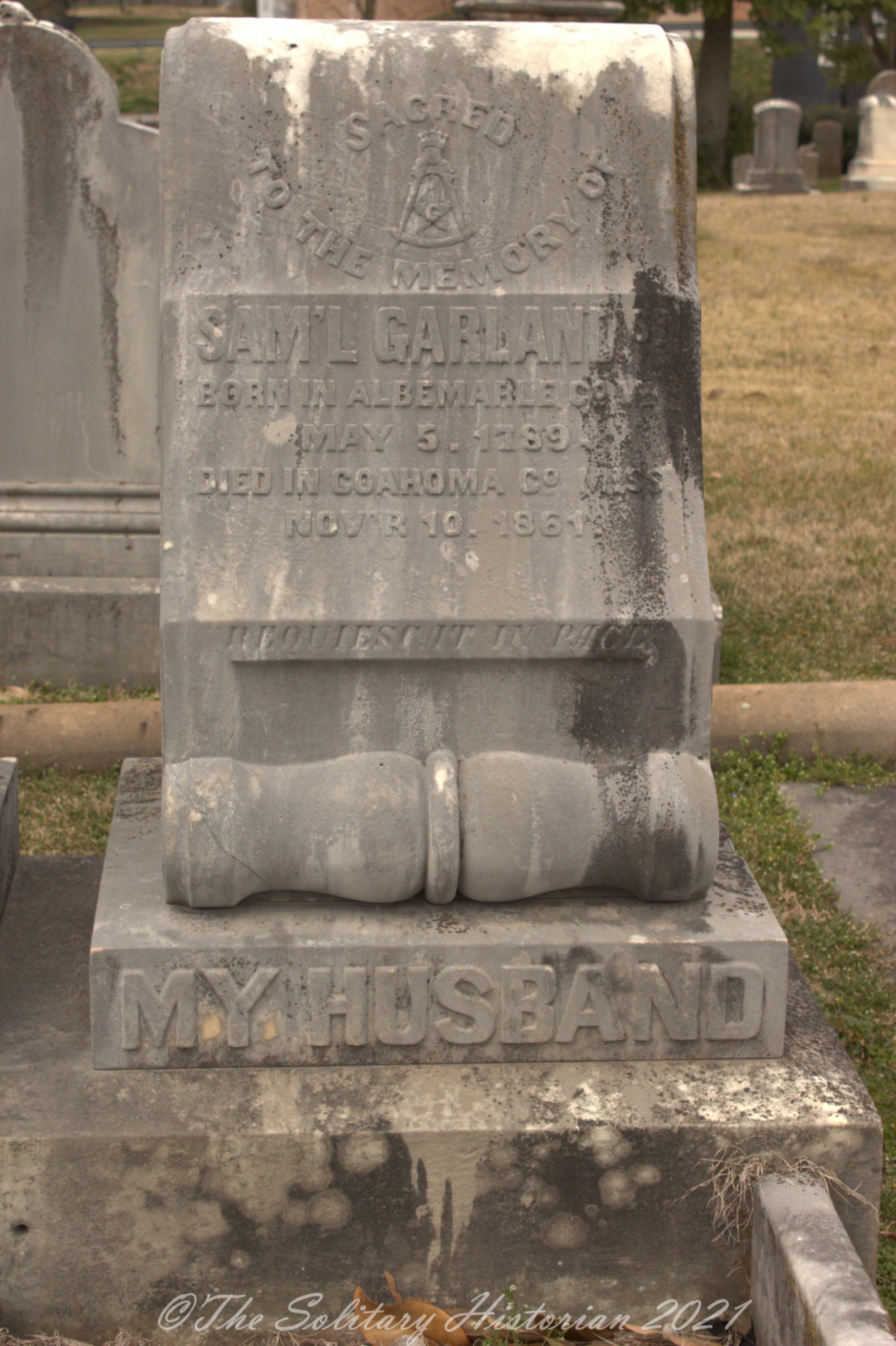

As a military historian, I personally love searching for veterans within old cemeteries. In the past when I moved to a new city it was typically because the military sent us there. Today, my husband is retired and we no longer move based on where the military sends us. Walking through old cemeteries allows me to connect with the military history the town might hold. While not every town had a military presence, many sent young men to fight in some war. It is not unusual to walk within a cemetery and find veterans that range from the American Revolution through the Iraq/Afghanistan wars.
As a Civil War specialist finding Civil War graves excites the inner researcher in me. It drives me to learn more about not just the individual (what battles he may have fought in) but the unit in which he served. Samuel Garland, Jr. started as a colonel with the 11th Virginia, which was part of Jubal Early’s brigade. When Early is wounded in the Battle of Williamsburg, Garland is promoted to brigadier general and placed in command of Early’s brigade. His first action as commander was at Seven Pines. In September 1862, during the Battle of South Mountain, Garland was situated around a place called Fox’s Gap. It is there that Garland is mortally wounded. His body is returned home to Lynchburg where it laid in state and on September 19, 1862 he is laid to rest in the Presbyterian Cemetery near his wife and son.

Old cemeteries have stories to tell, from veterans to the average citizen these stories lay buried in their plots with them. Historians can use information gathered from grave markers to kick start research whether it is local history or military history. They can learn about changes in how grave markers evolved or changed over time. Grave markers are not always the only type of monuments found in cemeteries. In many cases, there are ornate statuary in designs of angels, wishing wells and even 9/11 memorials. Old cemeteries are not meant just for ghost tours or saying goodbye to loved ones, inside each one there is something special to discover. It is up to you to get out and explore them and discover their secrets.

 The Solitary Historian
I too am a tapophile who is particularly interested in the military graves that are scattered all over South Africa. I enjoyed reading this as it resonates strongly with me.